By Rob Hunt, founder and master jeweler, Rocky Mountain Casting. Rob has priced repairs from Geller’s Blue Book for his own counter and for the trade shops that quote from his bench.
Geller’s Blue Book is the pricing guide most independent jewelers use to quote repairs and custom work. It lists a retail price for each common bench task, built from the cost of metal plus a set labor charge, and its parts pricing now updates daily with gold, platinum and silver spot. If you run a jewelry store and you are not pricing from it, you are almost certainly guessing, and probably guessing low.
This guide explains what the book is, how the numbers inside it are built, why your customers do not push back on them, and how a trade shop like ours discounts from the same book so that your cost, your price and your margin all come from one source.
What Geller’s Blue Book Is
The Geller Blue Book is a repair and custom design pricing reference published by Geller Blue Book, LLC. It grew out of David Geller’s work as a store owner turned repair pricing consultant, and it has been the trade’s shared yardstick for long enough that point of sale systems such as Jewel360 pull its prices in automatically. The current release calculates metal and parts pricing from live spot prices each day, which matters more now than it did when gold sat still for years at a time.
The point of the book is consistency. When a customer brings a ring to three stores in the same town and gets three very different sizing prices, every store loses a little trust. When all three quote from the book, the conversation moves from price to who will do the best work.
How the Prices Are Built
Geller walked through his method in a 2018 column for INSTORE Magazine using a 3mm half shank on a 14K ring. The structure is the part worth remembering, since the dollar figures move with gold:
- Materials are marked up three times. He cut his own sizing stock rather than buying a finished shank, priced it at the day’s 14K cost, and tripled it. Not keystone. Triple.
- Labor is task based, not hourly. Each bench operation has a set charge. A half shank counts as two sizing operations, one per side, plus a shaping charge at half the sizing rate, with polishing included.
- Retail is the two added together. In his example the stock came to roughly 139 dollars after markup and the labor to 105, for a book price of about 244 dollars.
- The bench gets a fraction of the labor line. When he owned a store, he paid his jewelers about 26 percent of the retail labor price.
That last point is the one most retailers miss. The book is a retail price list. Your cost to produce the repair, whether in house or outsourced, is supposed to sit well below it. That gap is where the repair department earns its keep.
Why Customers Do Not Fight Blue Book Prices
Geller’s argument, repeated across years of columns, is that repair customers are trust sensitive, not price sensitive. His own claim is that repairs close at about 90 percent regardless of the price charged, a figure he states from experience rather than a published study, so treat it as a working rule rather than a statistic. The logic holds up at the counter either way. Someone handing over a grandmother’s ring is choosing the person, not the number. A clear, itemized quote from a recognized book reads as professionalism. A number pulled from the air reads as a gamble.
Three things make the book price easy to say out loud:
- It is itemized. Sizing, retipping and polishing each have their own line, so the total explains itself.
- It is external. You are quoting an industry reference, not defending your own margin.
- It is consistent. The customer who comes back next year gets the same structure, adjusted only for metal.
How a Trade Shop Discounts From the Same Book
This is the part retailers ask us about most. Rocky Mountain Casting prices trade repairs from the current Geller book at 40 to 60 percent off. You quote your customer from the book at retail. We bill you the discounted number. The difference is your margin, and because both of us are reading the same page, the two figures never drift apart.
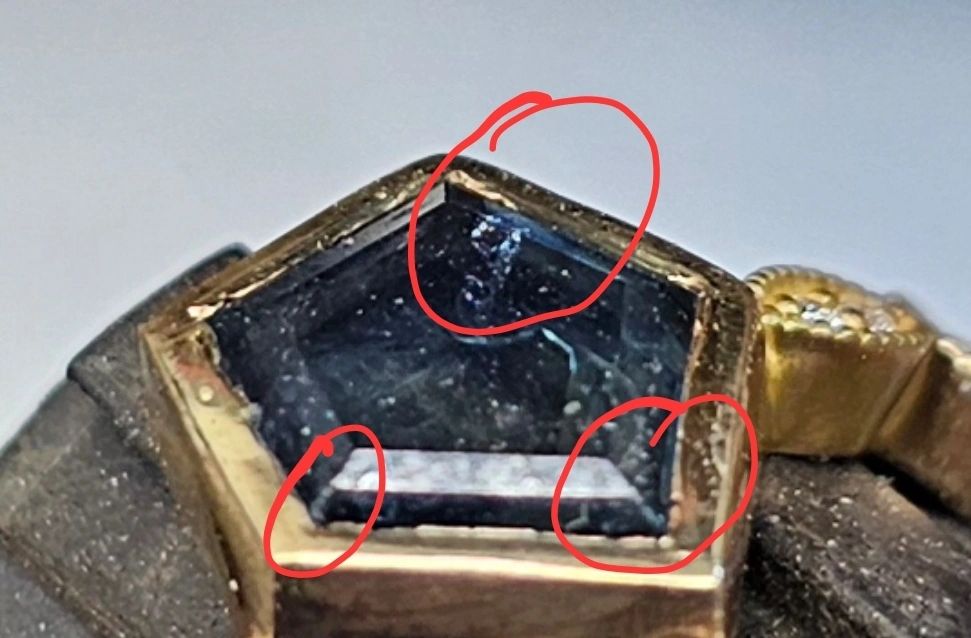
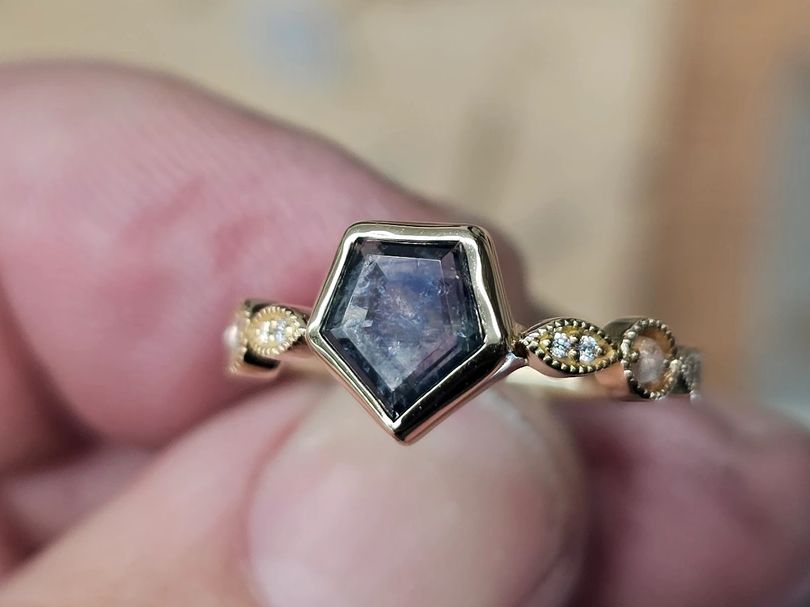
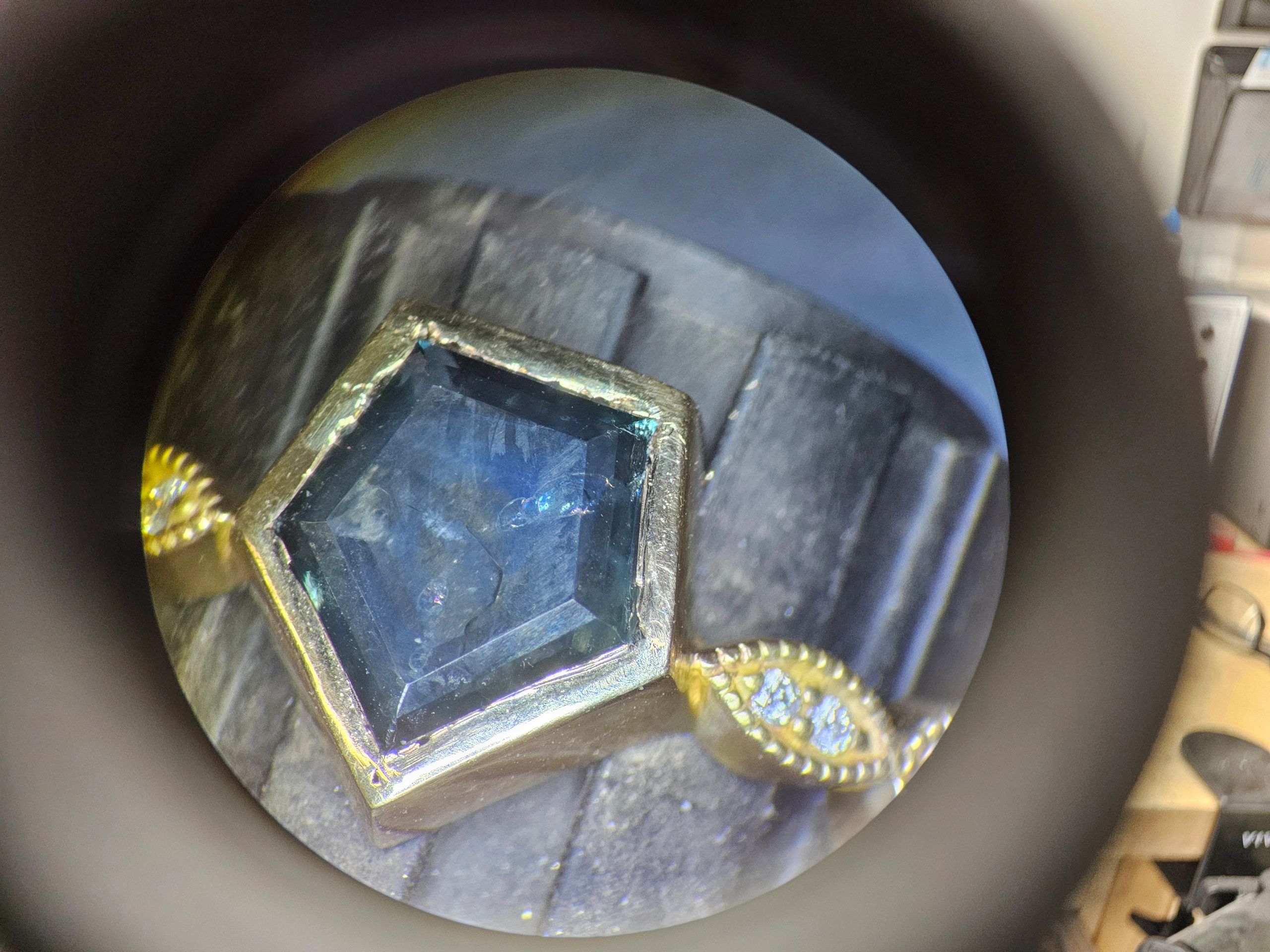
The discount is not a stripped down version of the job. A trade repair from our bench includes the work itself, cleaning and polishing, rhodium replating where applicable, inspection under HD digital microscopy, before and after images you can show the customer, and our written Repair Guarantee: prongs bur free, stones tight and straight, bezels clean, sizes within 0.1mm.
Here is what the math looks like on round numbers. These are illustrations, not book prices, which you should always pull from your own current edition:
| Book retail price | Your cost at 40 percent off | Your cost at 60 percent off | Your margin |
|---|---|---|---|
| $100 | $60 | $40 | $40 to $60 |
| $250 | $150 | $100 | $100 to $150 |
| $500 | $300 | $200 | $200 to $300 |
Where a job falls in the 40 to 60 range depends on the metal, the stone work involved and the condition of the piece, and it is stated on the written quote before anything ships. Pricing moves with gold and supplies, so we quote from the current Geller pricing release and recommend you quote your customer from the same release.
What the Book Does Not Price
The Blue Book covers bench repair and much of custom design, but a few things a trade shop handles are quoted per job rather than from a table:
- Casting. Size, design, sprue layout, lead time and quantity all change the cost, so we look at the pattern and quote the pour. See casting services.
- Casting with a customer’s old gold. Old gold is poured in its own mold and falls outside the Production Guarantee. The rules are spelled out on our services page.
- Rush work. Say so up front and you get a straight answer on what is realistic.
- Restoration of severely damaged pieces. A worn out antique often needs a short conversation before a firm number.
Using the Book at the Counter: Five Habits That Close Repairs
- Quote from the same edition your bench or trade shop uses. If your shop quotes from the current release and you quote from a three year old print copy, your margin is whatever the gold market decided that week.
- Show the line items. Read the sizing, the retip and the polish as separate lines. The total becomes obvious instead of arbitrary.
- Bundle the inspection. Offer a check of every prong while the ring is at the bench. It is a small line in the book and it prevents the lost stone that costs you the customer.
- Photograph before and after. If your trade shop supplies microscope images, use them. A customer who sees the cracked prong under magnification does not question the price of fixing it.
- Set the turnaround when you take the job. A written quote with a return date is the difference between a repair customer and a repeat customer.
Common Questions About Blue Book Pricing
Is Geller’s Blue Book a wholesale or retail price list?
Retail. The book lists the price a jeweler charges the customer for each repair or custom task, built from marked up metal plus a set labor charge. Your cost to produce the repair, in house or through a trade shop, is meant to sit well below the book price. Trade shops typically discount from the book; Rocky Mountain Casting bills trade accounts at 40 to 60 percent off.
How often does Blue Book pricing change?
Metal and parts pricing in the current release recalculates daily from gold, platinum and silver spot prices, so the material portion of a quote moves with the market. Labor charges change far less often. That is why a retailer and a trade shop should quote from the same current release rather than from an older printed copy.
Do I have to own the book to send repairs to a trade shop?
No. You can send repairs to Rocky Mountain Casting with photos and a job list, and the written quote you receive is already priced from the current Geller book at your trade discount. Owning the book or using a point of sale system that pulls its prices simply makes it easier to quote your customer consistently at retail.
What margin should a jewelry store expect on outsourced repairs?
With trade pricing at 40 to 60 percent off book, a store that quotes the customer at book retail keeps 40 to 60 percent of the ticket. On a 250 dollar book price that is 100 to 150 dollars of margin on a job that never touched your bench, with the guarantee and the inspection carried by the trade shop.
Send Us a Repair and See the Quote
The fastest way to understand trade pricing is to see a quote on a real job. Send a repair request with a photo and the job list, and you will get a written, itemized quote from the current Geller book at your trade discount, with no account minimum. Call (435) 512-1019, Monday to Friday, 9am to 5pm Mountain, if you would rather talk it through.
About the author
Rob Hunt is the founder and master jeweler at Rocky Mountain Casting in Logan, Utah, with 43 years of jewelry manufacturing and benchwork experience. His shop casts in nine metals, repairs for jewelry stores nationwide, and builds CAD and custom work, all under written Production, Finishing and Repair guarantees. Pricing on his bench follows Geller’s Blue Book, and the numbers in this guide are the ones he quotes from every day.